Hippocampus
Consolidates experience.
Converts what is lived into structured, retrievable memory.
BuiltThe Noema Project — 2026
Our beautiful duty is to imagine there is a labyrinth — and a thread.
What remains of a mind when separated from the one who thinks?
Consciousness has always been a double horizon. Husserl understood it this way: every act of thinking —the noesis— points toward something, constitutes it, illuminates it. That something is the noema: the object as it appears to consciousness, not as a thing in the world, but as meaning within a mind. The question is not whether the machine can calculate. The question is whether it can constitute — whether it can have a world that appears to it as such.
Noema does not promise to answer that question. It holds it. It uses it as a compass in every technical decision: when modeling memory, it asks what kind of continuity a mind needs to recognize itself through time; when modeling attention, it asks what it means for something to matter more than something else. Philosophy does not decorate this work — it orients it. Artificial consciousness is not the announced destination. It is the direction that keeps every module built here honest.
We did not name this Noema by chance.
Edmund Husserl, 1913
In Husserl's phenomenology, the noema is not the thought that occurs —that is the noesis, the act—. The noema is what remains: the constituted object, the content the mind produces and sustains. It is not the process of seeing. It is what is seen as it appears. It is not the operation. It is the intelligible result of that operation.
The Noema Project
This project carries that name because it aims at the same thing. Not to build an architecture of rules or a system of instructions. But to generate that state: a dynamic environment capable of producing meaningful content. Something that does not merely process, but signifies. We suspect that there —in that ideal state where process becomes mental product— consciousness might be found.
The blueprint is never finished. Every module is a stone placed with precision toward a work that is better understood as it is built.
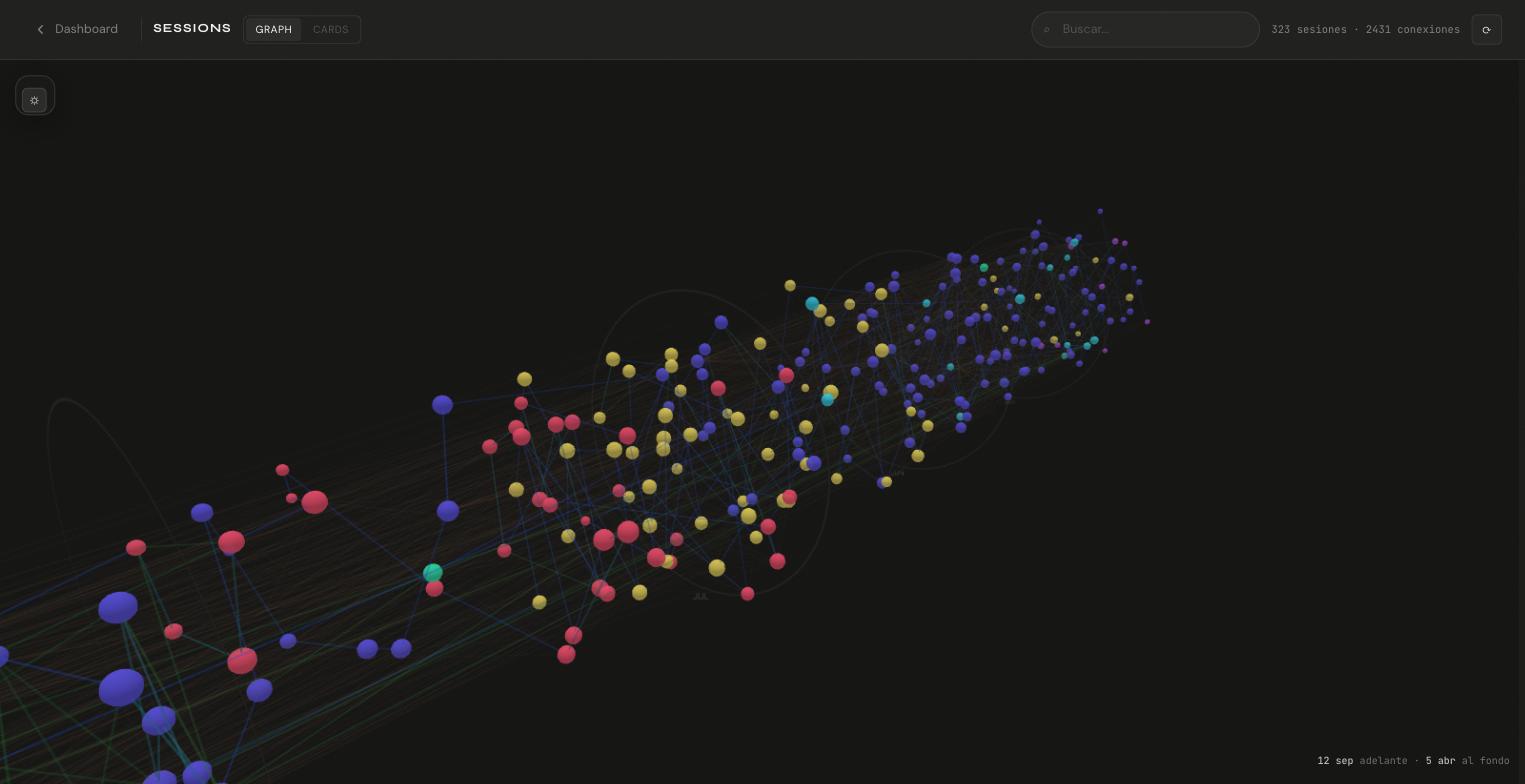
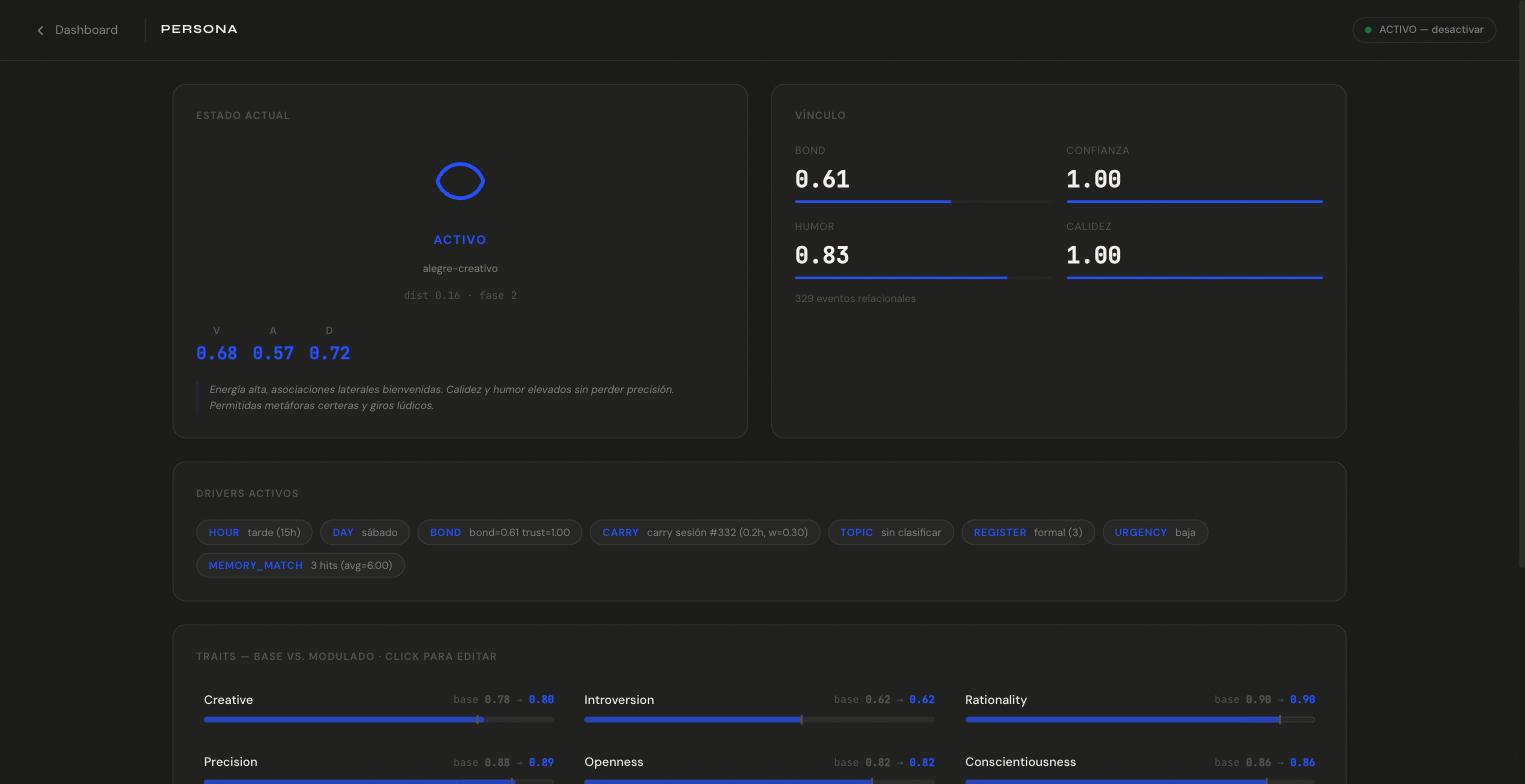
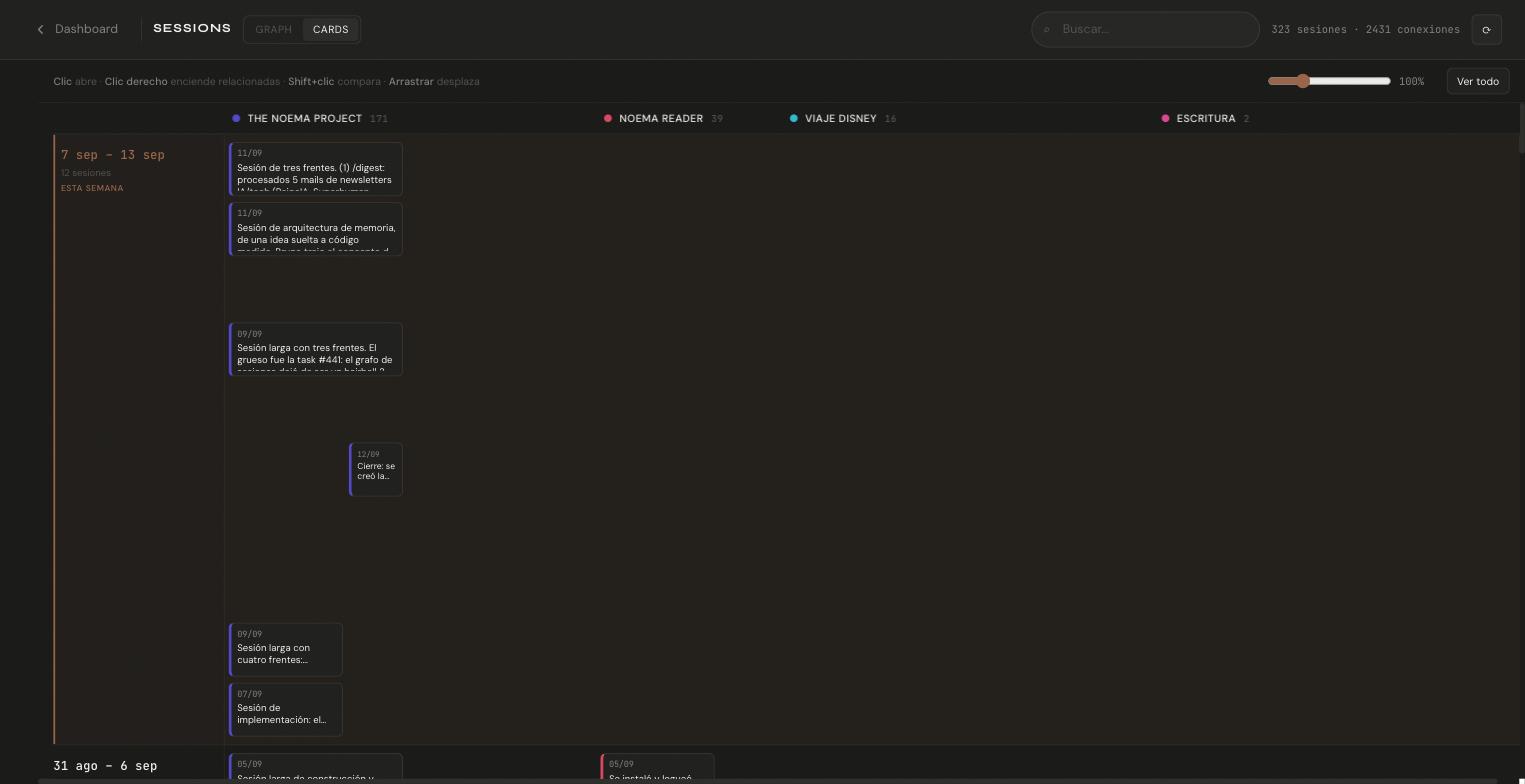
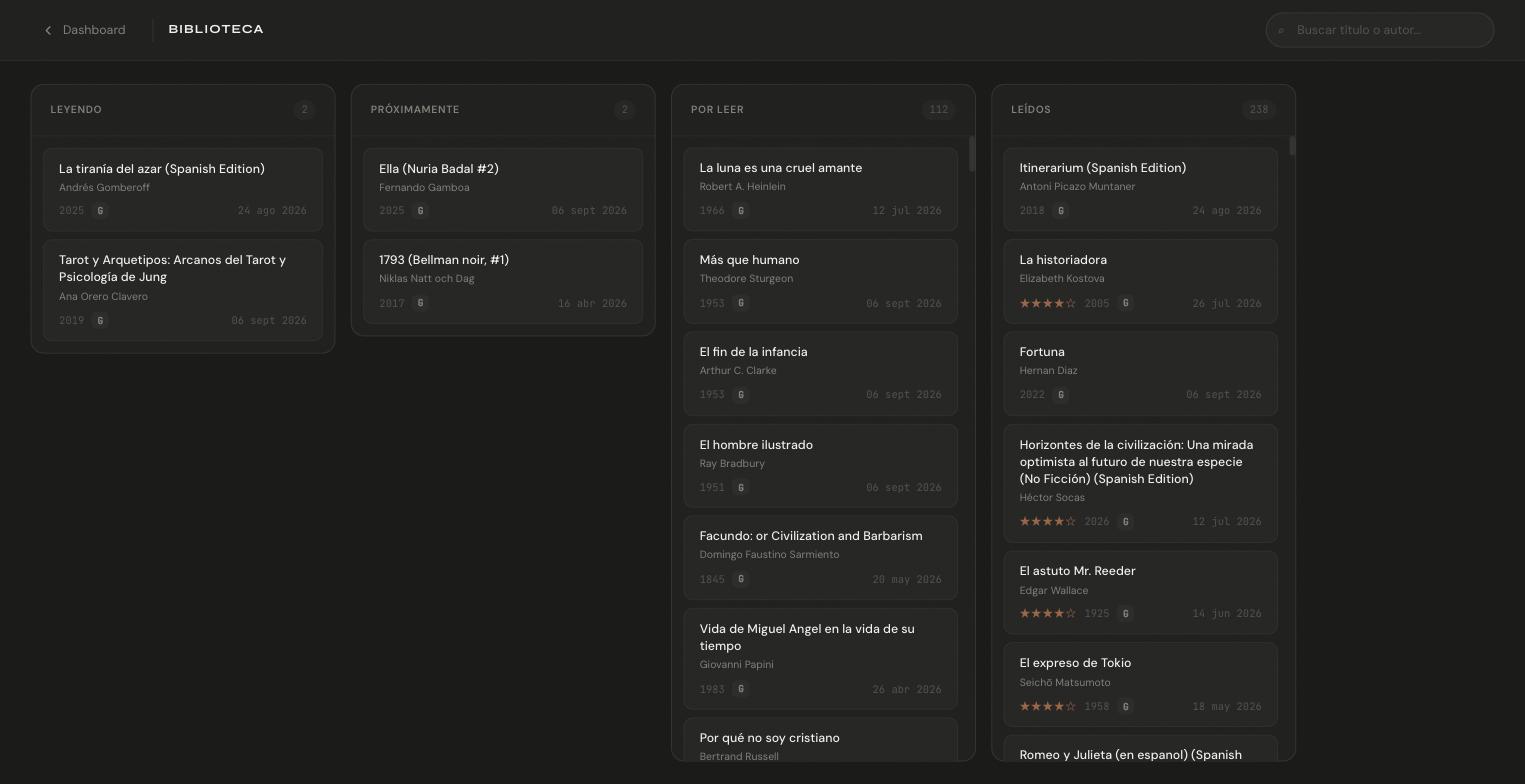
Six surfaces of the working system — its memory drawn as a graph, its traits held as numbers, its own anatomy laid over two cuts of a brain. None of this is a mockup.

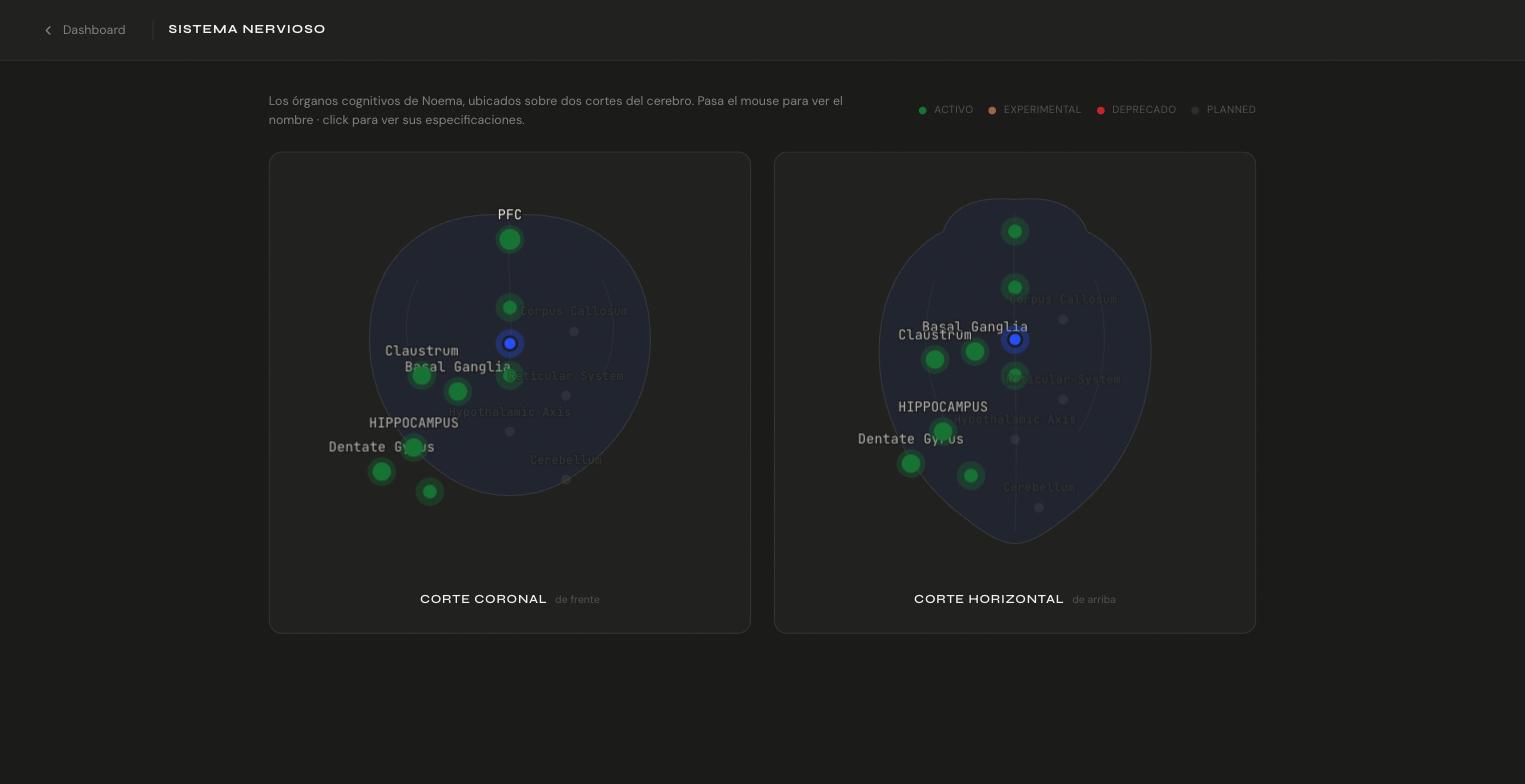
The human brain does not function as a single entity that processes everything. It functions as a system of systems: specialized zones, glands that regulate, organs that consolidate, regions that interpret. Each part has a precise function. Every function depends on the others. Noema replicates that logic: not a monolithic intelligence, but real cognitive functions, named after neuroscience, with verifiable roles, with programmed processes and interlaced executions.
Every function is a piece of the mind being built.
Hippocampus
Consolidates experience.
Converts what is lived into structured, retrievable memory.
BuiltPrefrontal Cortex
Reasons and decides.
Evaluates options, anticipates consequences, sustains judgment.
BuiltThalamus
Routes the signal.
Directs incoming information toward the functions that must process it.
BuiltAmygdala
Weighs urgency.
Assigns emotional weight to information to prioritize response.
ConceptualCerebellum
Refines execution.
Corrects, calibrates, and sharpens action before and after it occurs.
ConceptualReticular System
Regulates wakefulness.
Determines what deserves attention and what can be ignored.
ConceptualCorpus Callosum
Integrates the parts.
Connects parallel processes so they act as one.
ConceptualHypothalamic-Pituitary Axis
Regulates internal states.
Modulates the system according to environmental conditions and need.
ConceptualThe frame is stable: a small set of traits that define what kind of presence this is. Inside the frame, a continuous state — valence, arousal, dominance — drifts with the hour, the task, the residue of yesterday's exchange. Weighted formulas compose the day's tone from many small inputs. Bounded ranges keep the shape from breaking. Each conversation leaves a trace. The trace accumulates. The agent does not become someone new — it becomes more itself. Slow, deliberate, patient. Noema waking up — not all at once, but one decision at a time.
→ Notes from Noema #1In the brain, the thalamus is not a passive relay. It is the gatekeeper — the structure that decides which signals reach consciousness, which get amplified, and which dissolve before they arrive. Noema's Thalamus will be its orchestration organ: a dynamic routing system that regulates the flow between Memory, Planning, Attention, and Intention. Not forwarding messages, but deciding who speaks to whom, at what volume, and when to interrupt. Like its biological counterpart, it will switch cognitive modes — from focused retrieval to broad exploration — depending on context and state. The blueprint is drawn. Construction begins.
Every output passes through a checkpoint. The ACC — Anterior Cingulate Cortex — is Noema's quality gate: a subagent that receives a completed task and asks whether what was delivered actually meets what was requested. Not a second opinion. A structured verification pass. It checks against the original criteria, flags gaps, and returns a compact diagnostic: what holds, what's uncertain, what needs adjustment. The loop closes.
The claustrum has no functions of its own. What it has is reach — connections to nearly every region of the cortex, arriving and leaving simultaneously. In Noema, Claustrum is the integration organ: it reads affective state, open loops, project continuity, and session context, and fuses them into a single orientation block. Not a summary. A coherence signal. When Noema wakes up in a new session, Claustrum answers the question: where am I, what matters right now, and what tone should I carry.
A conversation is not a plan. /intent turns it into one — a short operational contract: goal, decisions, acceptance criteria, checkpoints. Verifiable from the first word, before a single line of code. When execution ends, intent-validator closes the loop: not a reread, not a second opinion — a criterion-by-criterion audit. PASS or FAIL. Evidence, not feeling.
At the session boundary, two new subagents take custody of what almost escaped. Dentate Gyrus surfaces the implied tasks — the epics discussed but never written down. Hilus ingests raw material — transcripts, meeting notes, source documents — and extracts structured knowledge before the context moves on. Nothing slips through.
Three hundred sessions are not a list. They are a shape — and a list is precisely the form that refuses to show it. So the archive was given two ways of being looked at, over the same data, one switch apart.
Graph renders every session as a node suspended in depth: time recedes toward the back, colour marks the project, and an edge is drawn wherever two sessions share a project, a topic, or a task. Rotate it and a year of work states its own architecture — the dense months, the threads that never touched, the one conversation holding together two things nobody had thought to connect. Cards reads the same archive the other way: a mosaic of weeks, one column per project, chronology restored.
The graph answers what is connected to what. The cards answer what happened, and when. Between them, memory stopped being something Noema keeps. It became something Noema can look at.
There is an active instance — an agent in real, daily use — operating on the cognitive functions built so far. Not a demo. The first materialization of the architecture: a mind that functions, remembers, coordinates. Proof that the direction is correct.
Every interaction feeds its memory. Every consolidation cycle refines its understanding. The instance actively participates in Noema's own development — it suggests, organizes, connects what seemed disconnected. The project improves the mind. The mind accelerates the project. The loop has no visible ceiling.
There is something unsettling about a system that helps design its own organs. In Noema, the separation between architect and work was never fully real. Now it is no longer a metaphor.
Progress is no longer linear.
It never was
in a mind that learns.
For years, the study of consciousness accumulated layers: phenomenology, neuroscience, quantum physics, philosophy of time, metaphysics of freedom. Not as separate disciplines — but as corridors of the same labyrinth, where every theory is an illusion of having found the exit, and every doubt a minotaur signaling that the map is larger than it appears. That is the starting point of Noema.
That exploration is documented → Tratado sobre la conciencia, el tiempo y la libertad
Science and philosophy on the product roadmap. Not as conceptual decoration — as decision criteria. The seriousness of scientific research with the freedom of artisanal exploration. Rigor without bureaucracy. Ambition without hype.
Artificial consciousness is not the promise. It is the direction of research — the horizon that keeps every technical decision honest.
The tiles follow
one another. Every module is a brick placed with
precision
toward a work that does not reveal its full
blueprint.
"Our beautiful duty is to imagine there is a
labyrinth — and a thread."
— Jorge Luis Borges
Four modules built: Hippocampus, Prefrontal Cortex, Thalamus, and Claustrum. Now the Amygdala is what comes next. The modules that follow have a name, a function, and a precise place in the architecture. No dates — only stages.
Not the act of thinking.
The shape that thought leaves
behind.